The Cost of Avoidance
- Crimson Host

- May 5
- 3 min read
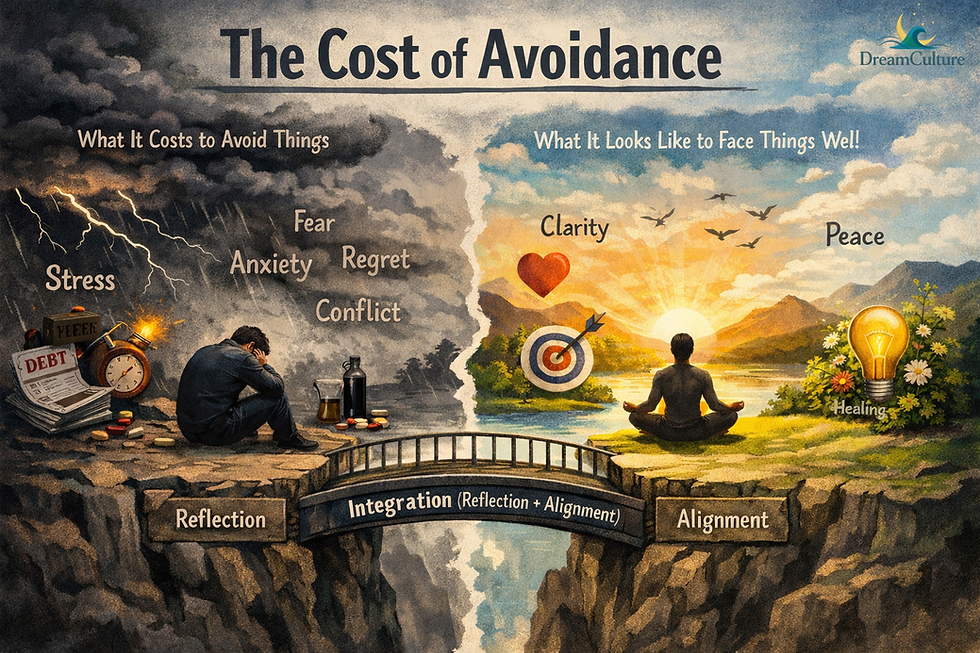
There’s a moment after every emotion where after the anger rises. After the disappointment settles and after something in you says, “this doesn’t feel right.” in that moment, you have a choice. To face it or to avoid it. Most people don’t consciously choose avoidance. They slide into it and they stay busy, they change the subject, they spiritualize it too quickly or they say “I’m fine” when something inside them clearly isn’t.
But avoidance is not neutral, it has a cost. One that doesn’t remove the weight, it just spreads it across your life. What you don’t process emotionally, you start to live out behaviorally.
Unspoken things become tension. Unresolved hurt becomes distance. Confusion becomes poor decisions. You may not feel it all at once, but you will see it in your patterns.
The same conversations you keep avoiding
The same cycles you keep repeating
The same inner resistance you can’t explain
That’s not random, it qualifies as unprocessed life. “Be sure your sin will find you out.” — Numbers 32:23. Not in a condemning way, but in a revealing one. What is hidden doesn’t stay hidden. It shows up in timing, in reactions, and in relationships.
Avoidance also numbs clarity. When you don’t sit with what’s real, you lose your ability to discern what’s true. You start making decisions from discomfort instead of alignment. You say yes to things just to keep peace. You stay in places longer than you should. You delay action not because you don’t know, but because you don’t want to deal and over time, something deeper happens: You disconnect from yourself Subtly. You stop checking in. You stop being honest. You stop trusting your own inner signals.
And now it’s not just about the situation you avoided it becomes about the version of you that learned to look away.
Avoidance feels easier in the moment, but it makes life heavier over time. Facing things feels harder in the moment, but it makes life lighter over time.
So the real question becomes: What am I currently avoiding that is quietly shaping my life?
What It Looks Like to Actually Face Things Well
Facing something is not reacting to it. It’s not raising your voice. It’s not sending that long message in the heat of the moment. It’s not forcing closure just because you’re uncomfortable. That’s not facing. That’s discharge.
Facing well starts with honesty without performance. You sit with what’s real before you try to fix it. “What am I actually feeling?” Not the polished answer. Not the spiritual answer but the honest one.
Am I hurt? Am I disappointed? Am I afraid of what this means? Most people skip this step and that’s why everything after it is misaligned. You don’t deny the emotion. But you also don’t let it lead.
“A person without self-control is like a city with broken-down walls.” — Proverbs 25:28
If you face things while dysregulated, you don’t bring truth, you bring intensity and intensity often hides the actual issue. So you slow down enough for your emotions to become clear, not just loud.
Most people quietly exit at this point because facing something well means asking:
What is mine in this?
Where did I stay silent when I shouldn’t have?
Where did I overextend?
What did I ignore that I knew?
Not to blame yourself but to stay in truth because you cannot change what you refuse to own.
Then comes expression with intention.
Now you speak. Now you act. Now you address it. But you’re no longer speaking from reaction, you’re speaking from clarity. There’s a difference between:
“You always do this…” and
“When this happened, this is what it created in me.”
One escalates, the other reveals. Facing well is not about winning the moment. It’s about telling the truth in a way that can be received.
And finally ~ release.
Not everything will resolve the way you want. Some conversations won’t go well. Some people won’t meet you in the same depth. Some outcomes will stretch you. Facing well includes accepting that.
“If it is possible, as far as it depends on you, live at peace with everyone.” — Romans 12:18
Notice, as far as it depends on you, your responsibility is alignment. Not control.
This is the difference
Avoidance says: “I don’t want to deal.” Reaction says: “I need to deal now.” Alignment says: “I will deal well.”
Facing things well is slower than avoidance and quieter than reaction but it’s clean and it leaves you with less regret, more clarity and a stronger relationship with yourself.


Comments